
✔️ There is thoughtful consideration for selecting learning materials and activities that are culturally relevant and inclusive.
Review these Explanations

Photo by Nathan Dumlao on Unsplash
While higher education is experiencing growing diversity, the outcomes for students from various demographics may not be equitable, and the composition of a class may not always mirror the broader institutional student population. To align with the diversity and equity goals of higher education, it is imperative to extend participation in classrooms by adopting inclusive teaching practices. This entails fostering an environment where all students, regardless of their backgrounds, have equal opportunities for success. The commitment to inclusive teaching is vital in addressing disparities and creating an educational landscape that reflects the diversity within the larger institutional community (Goering et al., 2022).
By acknowledging and respecting the diverse cultural backgrounds of learners, educators create a space where students can connect with the material on a personal level. This approach enhances the overall learning experience, promotes global perspectives, and contributes to the development of intercultural competence. Culturally relevant content not only supports educational goals related to diversity and inclusion but also prepares students for success in an interconnected world, where understanding and respecting diverse perspectives are essential skills for global citizenship. Furthermore, exposure to diverse cultural content fosters critical thinking and a deeper understanding of complex issues, enriching students’ intellectual growth. Ultimately, incorporating cultural sensitivity into online courses enhances engagement, retention, and the overall satisfaction of learners, creating a dynamic and inclusive educational environment that prepares students for success in an increasingly diverse and interconnected global landscape.
A culturally inclusive activity is an educational or interactive task that respects and embraces the diversity of cultural backgrounds, perspectives, and experiences within a group or learning environment. Such activities are designed to be accessible and relevant to individuals from various cultural contexts, ensuring that all participants feel valued, respected, and included. Culturally inclusive activities often encourage open dialogue, foster understanding, and celebrate differences, promoting a sense of belonging for everyone involved. These activities aim to go beyond surface-level acknowledgment of diversity and actively incorporate diverse cultural elements to enrich the learning experience and create a more inclusive environment.
Refresh Your Course with These Ideas
General Suggestions:
- Cultural competence training for instructors.
- Research student cultural backgrounds and preferences.
- Ensure diversity in learning materials and examples.
- Use inclusive language, avoiding stereotypes.
- Conduct sensitivity review of course materials.
- Design culturally relevant and meaningful activities.
- Offer diverse assessment methods.
- Integrate global perspectives into content.
- Develop cultural competency rubrics for assessments.
- Establish a feedback mechanism for cultural inclusivity.
- Ensure accessibility for diverse learning needs.
- Regularly review and update course materials.
- Collaborate with experts in multicultural education.
Examples
Inclusive and Culturally Responsive Teaching
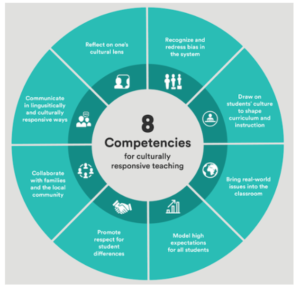
Eight Competencies for Culturally Responsive Teaching by New America shared under Creative Commons Attribution 4.0 International license https://www.newamerica.org/education-policy/policy-papers/culturally-responsive-teaching-competencies/
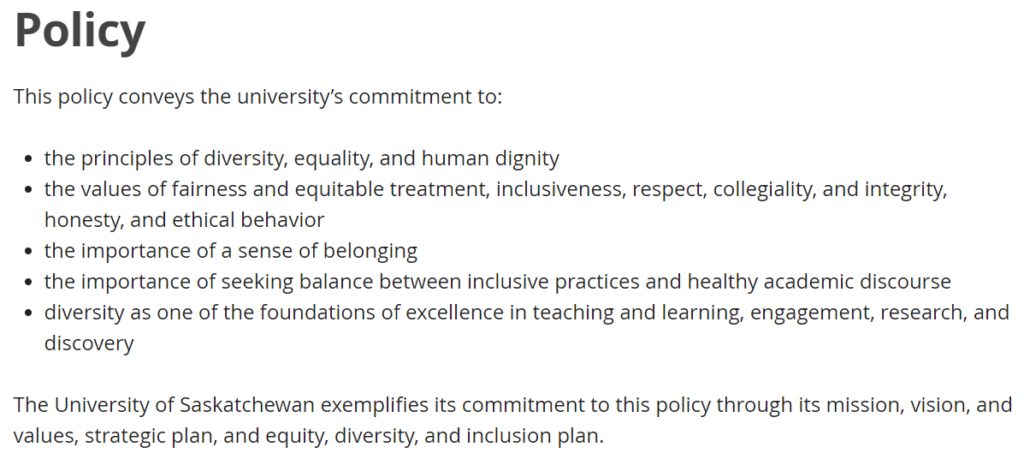
USask Equity, Diversity and Inclusion Policy
Culturally Inclusive Practices
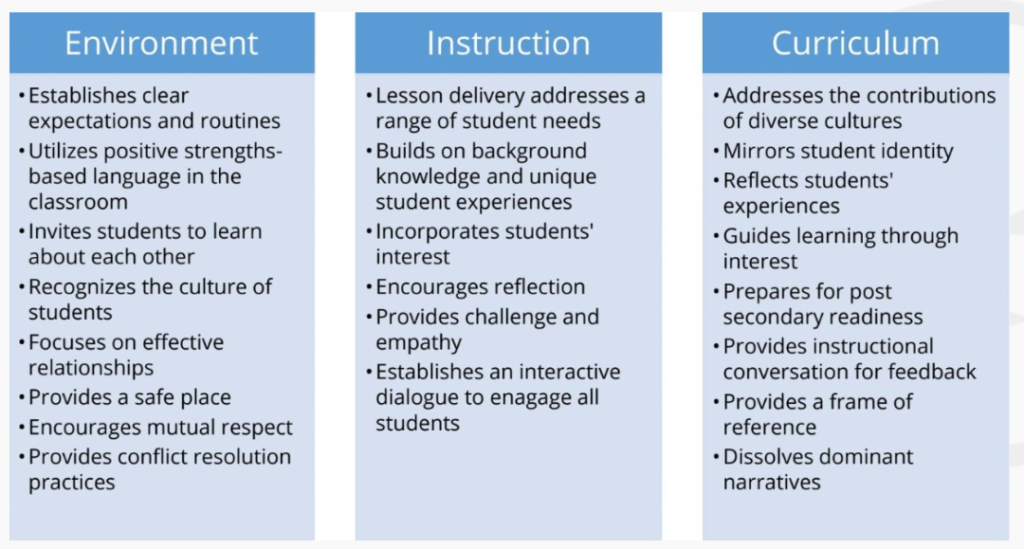
Image: TN Department of Education
References:
Fosslien, L., & Duffy, M. W. (2019). No hard feelings: The secret power of embracing emotions at work. Penguin Publishing Group.
Goering, A. E., Resnick, C. E., Bradford, K. D., & Othus‐Gault, S. M. (2022). Diversity by design: Broadening participation through inclusive teaching. New Directions for Community Colleges, 2022(199), 77–91. https://doi.org/10.1002/cc.20525
- Culturally Responsive Teaching
- Diversity and Inclusion Report
- M. Dracup, J. E. Austin & T. J. King (2018): Applying cultural-historical activity theory to understand the development of inclusive curriculum practices in higher education, International Journal of Inclusive Education, DOI: 10.1080/13603116.2018.1492638
- Pridham, B., Martin, D., Walker, K., Rosengren, R., & Wadley, D. (2015). Culturally inclusive curriculum in Higher Education. The Australian Journal of Indigenous Education, 44(1), 94–105. https://doi.org/10.1017/jie.2015.2