
✔️ Course grading policies, including consequences of late submissions, are clearly stated in the course information area or syllabus.
Review These Explanations
Learners need to know how their work will be assessed in a clear and transparent manner. Grading policies can guide learner progress, and promote fair and objective review and assessment of all graded work. Research shows that grading policies directly impact learner motivation. Elikai & Schuhmann (2010) found that strict grading policies motivated learner learning by associating levels of mastery and performance with a specific grade, and guiding achievement progress. Having a clear understanding on how one will be assessed and evaluated also scaffolds online learner self-regulation.
All activities, assignments, and graded activities should have clear goals and criteria for assessment within their descriptions. Linking back to grading policies from each graded activity will provide more opportunities for learners to understand what is expected from them, and the associated guidelines, or rubrics can help guide their progress through the assignment or graded activity.
Including clear course grading policies in both the Course Information/Syllabus materials will also mitigate issues related to and learner questions, concerns, or challenges regarding grades received.
Refresh Your Course with These Ideas
General Suggestions:
- Course grading policies and guidelines, including performance expectations, scheduled communications for feedback, expectations regarding timeliness of feedback and returned work/grades, examples/models, grading schemes, extra credit, and missed deadlines, late submissions, missed/incomplete work and the consequences, are clearly articulated in the Course Information/Syllabus materials.
- Establish criteria that ties back to program, course, and module objectives. Consider characteristics of work such as clarity, precision, spelling, grammar, creativity, critical inquiry, demonstrable skills, etc.
- Keep things simple. If an assignment or graded activity can be measured by pass/fail, consider using a simplified grading scale.
- Set strict re-grading rules and stick to them. Including a clear policy on changing grades, or disputes will mitigate learner grade inquiries.
- The importance of meeting deadlines, on-time and complete submissions of course work, is emphasized in the grading policies.
- Create a handbook of grading policies and rubrics that learners can download and keep on hand while they are working on assignments/projects.
- If you set up peer-reviewed graded work, be sure to provide establish a grading system and/or rubric specifically for the learners, and ask for feedback on how well they think the system and/or rubric is working.
- For group projects, include a team reporting tool with a grading rubric for learners to provide feedback on how other learners fulfilled their roles on the team.
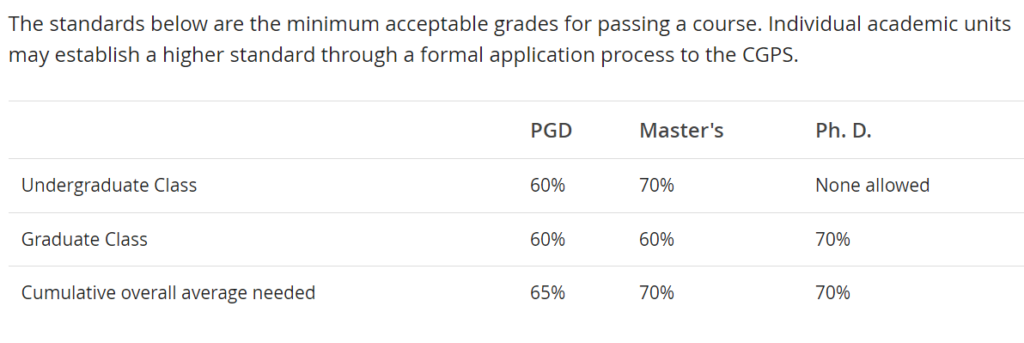
- Explicitly state in the Course Expectations/Evaluation materials that a learner can not not choose to not engage or complete (i.e., fail) any one aspect, or component of the course, and still pass the course.
- Classroom Management for Online Courses.
Supporting Academic Honesty
- Our Bodies Encoded: Algorithmic Test Proctoring in Higher Education
- Examining the Effect of Proctoring on Online Test Scores
- Supporting Academic Honest and Integrity of Online Assessments
- Should You Worry About Cheating on Online Tests During COVID-19?
- Fourteen Simple Strategies to Reduce Cheating on Online Examinations
- Best Way to Stop Cheating in Online Courses? ‘Teach Better’
- Academic Integrity is not Plagiarism
- Supporting Online Learner Success
Explore More Refreshing Ideas from the Teaching Online Pedagogical Repository (TOPR) at the University of Central Florida (UCF)
These Pedagogical Practices from TOPR explore methods and approaches to providing clear grading guidelines and rubrics for learners in support of learner success in online courses.
Create a Course Contract Assignment to Help Students Learn about Course Policies
It is very important to design an online course in a way that supports students to get started on the right foot (Chico, 2009). When a student starts an online course, they read the essential course information (syllabus, course expectations, instructor introduction) and learn about the course policies and expectations. Otherwise, miscommunications can happen due to a lack of understanding of the essential course information. (Read more …)
Use Rubrics to Evaluate Students’ Online Discussions
While faculty might hope that students can “just discuss” a topic online with little or no support, Beckett, Amaro‐Jiménez, and Beckett (2010) found that “even doctoral students may need explicit grading instructions, and therefore provide rubrics and sample responses while not stifling creativity” (p. 331). Rubrics provide clear expectations for students regarding how an assignment, that can otherwise be subjective, will be graded. (Read more …)
Use Syllabus Quiz to Familiarize Students with Course Policies and Expectations
In the online environment, it is important to provide clear expectations, policies, and grading expectations and to ensure that students are familiar with these policies and expectations (California State University, Chico, 2014). You may have a very detailed syllabus. However, students may not carefully read all of these details. (Read more …)
- Faculty Focus: Special Report – Assessing Online Learning: Strategies, Challenges and Opportunities
- Yalcin, A., & Kaw, A. (2011). Do Homework Grading Policies Affect Student Learning? International Journal of Engineering Education, 27(6), 1333-1342.