
✔️ Course offers opportunities for synchronous interaction (e.g.: live webinars, chat rooms, virtual office hours, etc.) (Note: in an asynchronous course, these may be optional).
Review These Explanations
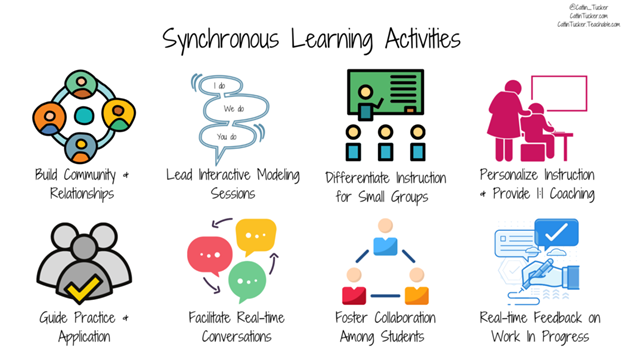
Image: Catlin Tucker
Incorporating opportunities for synchronous interaction is essential for enhancing the online learning experience. Real-time interaction between instructors and students fosters dynamic discussions, immediate clarification of concepts, and live feedback, creating a sense of community and active participation. Synchronous sessions enhance collaboration, allowing students to work together on projects and engage in cooperative learning experiences. The structured schedule of synchronous learning promotes regular attendance and a disciplined learning environment. Simulating the in-person classroom experience, these sessions facilitate real-time assessments, quizzes, and polls, aiding instructors in gauging immediate understanding. Moreover, synchronous learning encourages social interaction, contributing to a more engaging and enjoyable learning atmosphere. By supporting diverse learning styles and preparing students for real-world collaboration, the integration of synchronous learning complements asynchronous methods, creating a well-rounded and inclusive experience.
Refresh Your Course with These Ideas
General Suggestions:
- Choose reliable and user-friendly tools like video conferencing platforms, chat applications, and virtual office hours software for real-time interactions.
- Seamlessly integrate real-time interaction tools with the Learning Management System (LMS) for accessibility and a unified learning environment.
- Set consistent schedules for live webinars, chat sessions, and virtual office hours to facilitate planning and participation.
- Offer clear instructions on accessing and participating in real-time sessions, including technical requirements communicated in advance. Consider recording live webinars or virtual office hours for flexibility, allowing students in different time zones to access content.
- Actively promote student participation in real-time interactions, emphasizing the value for learning and community building.
- Structure live sessions with interactive elements like discussions, polls, Q&A, and collaborative activities.
- Provide resources and assistance for technical issues during real-time interactions to ensure a smooth experience.
- Ensure accessibility of real-time tools, considering diverse needs like captioning and alternative communication channels.
- Offer training sessions or tutorials on tool usage, especially beneficial for students new to online learning or specific tools.
Strategies for Engagement during Synchronous Activities (Sebastian N., 2021)
Class Commencement:
Start your university class by fostering connections through an opening question and building rapport with your students. Ask students to share what’s currently filling or emptying their emotional “buckets.” Encourage them to discuss what inspires them, share recent readings or media they’ve engaged with, and reflect on what made them smile recently. Additionally, invite them to share one interesting fact about themselves. Provide a platform for social-emotional check-ins, allowing students to share positive highlights (roses) or challenges (thorns) from the previous week.
Participation Guidance:
Facilitate active participation by giving clear cues. For instance, use the chat for questions or contributions, ask students to unmute when sharing responses, or use visual cues like thumbs up or green check to signal readiness for the next step. Encourage those with cameras off to engage through the chat.
Breakout Room Structure:
Structure breakout rooms with specific tasks and roles tailored for university students. Assign roles such as Discussion Leader, Note-taker, and Timekeeper. Introduce collaborative learning strategies like Process Oriented Guided Inquiry Learning (POGIL) to enhance group engagement. Ensure participants are aware of how to seek assistance in breakout rooms and the flexibility to return to the main room at any time.
Assessment Techniques:
Incorporate dynamic assessment techniques suitable for university students. Use protocols like Four Corners, where students express their stance in the chat, and then organize breakout rooms based on their positions. Explore Meet in the Middle to identify shared perspectives within the group, and incorporate Mindful Minute sessions to promote emotional well-being during virtual sessions.
Social-Emotional Connection:
Recognize the university students’ need for engagement and breaks during lectures. Break up longer sessions with brief water or stretch breaks to maintain focus. Prioritize social-emotional check-ins before diving into academic content, creating a supportive and inclusive learning environment for university-level learners.
References:
- Strategies: https://www.educatiouw.edu/technologycenter/student-engagement-synchronous-online-learning/strategies-to-engage-students-in-online-synchronous-learning/
- Tools and Sample Lesson: https://carleton.ca/tls/teachingresources/teaching-online/synchronous-learning-tools/
- Link for multiple articles: https://sites.usask.ca/edtech/category/synchronous/
- Engaging Synchronous Activities Guide: https://ecampusontario.pressbooks.pub/aguideforbusyeducators/chapter/creating-engaging-online-synchronous-activities/