Carolyn Aubry-Wake gave a French language talk on glaciers and forest fires on Wednesday, May 13th. Listen to this talk and others here.
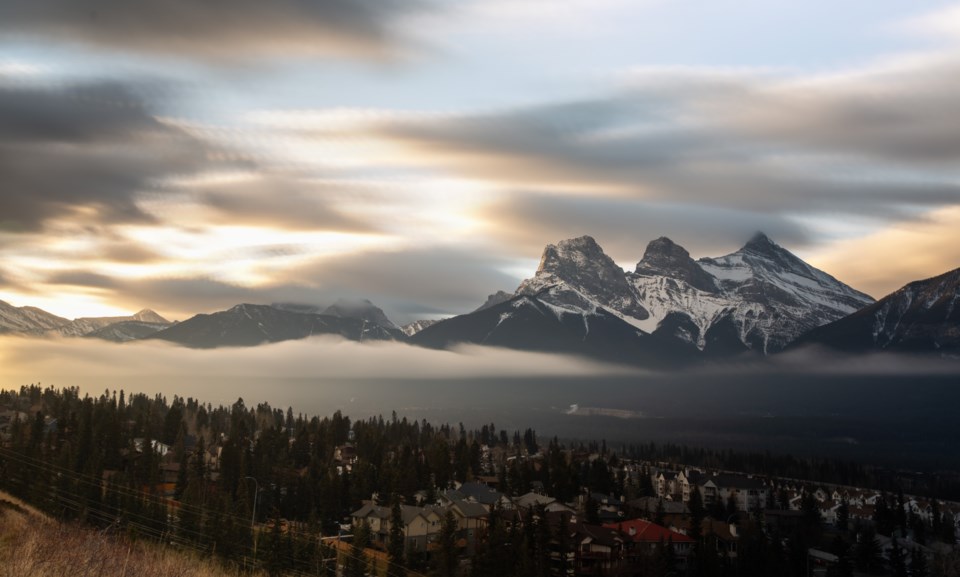
Above average snowpack levels in front ranges of Rocky Mountains

Image courtesy of RMOToday.com
The following is an excerpt from an article in RMOToday.com:
BOW VALLEY – With warmer weather throughout the Rocky Mountains, experts and municipal officials are keeping an eye on snowpack levels and weather forecasts as well as their potential effects on the Bow Valley’s waterways.
With a network of 35 high-elevation weather stations across the Rocky Mountains – from the Athabasca Glacier to the top of Fortress Mountain – director of the Canmore-based University of Saskatchewan’s Cold Water Laboratory John Pomeroy said Monday (April 27) that snowpack levels in the front ranges are currently above average.
“When you see a lot of snow on the mountains around Canmore, that is reflecting those high front range snowpacks,” Pomeroy said.
Read the full article here
“Transitions” Catalogues Now Available Online
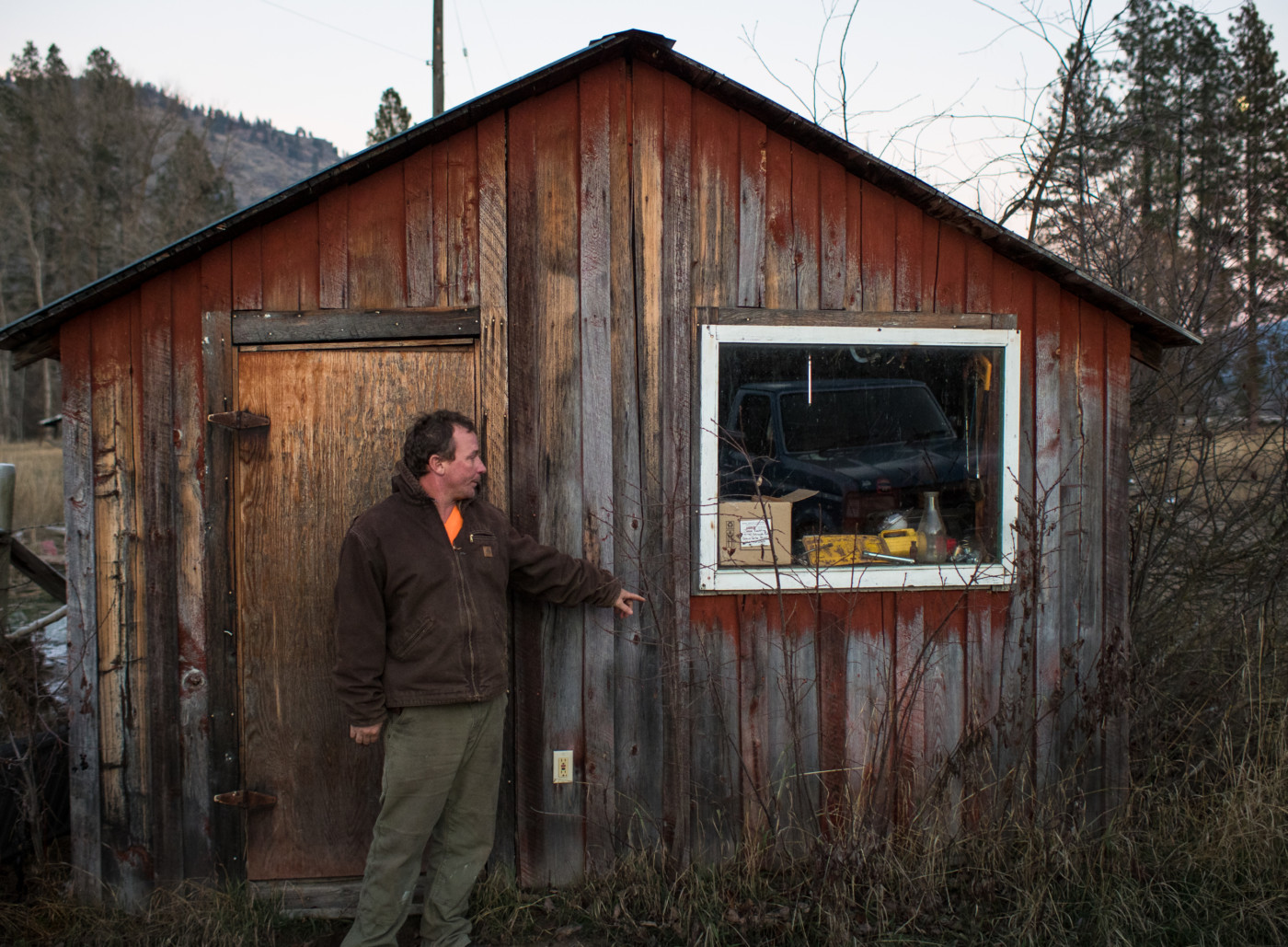
Amid coronavirus pandemic, some B.C. communities brace for flooding as well
Link

Image courtesy of The Narwhal
The following is from an article in The Narwhal:
Communities right across the country, from New Brunswick to B.C., are facing the possibility of two public crises at once this spring.
“The only thing worse than a pandemic is a pandemic and a flood,” said John Pomeroy, Canada Research Chair in Water Resources and Climate Change based at the University of Saskatchewan.
Read the full article here
WMO Bulletin – High Mountain Summit: Outcomes and Outlook
The WMO High Mountain Summit on 29-31 October 2019 concluded with a Call to Action and a roadmap of priority activities. The priority actions aim to support more sustainable development, disaster risk reduction and climate change adaptation both in high-mountain areas and downstream.
Click here to view the full bulletin on the WMO Website
John Pomeroy CWRA Webinar Online
A CWRA Webinar on the Impact of Climate Change on Canada’s Snow and Ice Resources is now available online. This is a webinar that John Pomeroy gave on March 17th as part of World Water Day.
View the webinar online
USask hydrology program earns certification by geoscientists
The new University of Saskatchewan (USask) hydrology program passed a major milestone last week by achieving certification from Saskatchewan’s licensing body for geoscientists.
At a remote meeting of the Association of Professional Engineers and Geoscientists of Saskatchewan (APEGS) on March 24, the association’s Academic Review Committee voted that the USask Bachelor of Science Four-Year and Bachelor of Science Honours programs in hydrology meet Canadian knowledge standards in environmental geoscience.
The certification means that students graduating from the undergraduate hydrology program will be eligible for professional registration as geoscientists-in-training—the first step to becoming a professional geoscientist in Saskatchewan.
Read the full article on the Arts & Science website
Rockies’ conditions reflected in IPCC high mountains report
Earth’s high mountain areas are so significant in terms of climate change impacts that last fall the Intergovernmental Panel on Climate Change (IPCC) issued its Special Report on the Ocean and Cryosphere in a Changing Climate.
Around the world, high mountain areas are places that hold much of Earth’s cryosphere, as the frozen parts of the planet are known, including snow, glaciers, permafrost and lake ice and river ice.
These high mountain areas are also where widespread changes are taking place in response to the planet’s warming temperatures. Declining snowpacks and shifts in the amount and timing of snowmelt runoff are just some of the changes happening in these areas.
The effects aren’t limited to the mountains, but have impacts on physical, biological and human systems in the lowlands downstream.
That includes the Canadian Rockies, foothills and prairies.
Climate change, pollution and urbanization threaten water in Canada
In recent years, the daily news has been flooded with stories of water woes from coast to coast to coast.
There are melting glaciers and ice sheets in northern and western Canada and lead in drinking water in the older neighbourhoods of many cities in Canada. We see toxic blue green algae threatening pets, livestock and drinking water as well as catastrophic floods, droughts and fires.
In 2018, parts of British Columbia experienced devastating floods, followed by wildfires a couple of months later.
Our water resources are under threat from contamination, land use, urbanization and climate change. If we’re not careful, it may not be clean enough or available when we need it.
Manitoba hydro power could help Sask. cut back on coal
From the Winnipeg Sun:
A newly-approved transmission line from Manitoba to Sask. could help the latter wean itself off coal and develop more renewable energy infrastructure.